Written by Mattia Teresa Falvo
Before I leave to resume my studies in contemporary dance at the Institute of the Arts Barcelona, I had the opportunity to participate in Festival Quartiers Danses (FQD) as a volunteer. For its 24th edition, I immersed myself in several performances and events that celebrated dance and showcased the Montreal—and international—dance scenes. After this experience, I compiled two highlights from my time as a volunteer and three highlights from the choreographies (in no particular order).
AUDIENCE ATTENTION & ENGAGEMENT
As I counted the number of spectators at the Atwater Market, I also observed the audience’s attitudes and level of interest. A woman standing very close to the stage was taking notes in her journal during the performance. A man asked me the name and theme of each piece so he could interpret them in light of the performers’ original inspirations. Local residents, who rarely encountered dance in their daily lives, gave the performers their full attention. After the show, my colleagues and I enthusiastically discussed the audience’s genuine and deep engagement. As a dancer, I’m less interested in whether the audience has “understood” a performance; what’s most valuable is openness. It creates the possibility of receiving what art has to offer—whether physical sensations, emotions, or memories. In short, I was moved by the curiosity and interest of the audience members I met while volunteering.
THE OPENING CEREMONY
I find myself in a bustling room filled with artists, organizers, and colleagues, all eagerly awaiting the opening of FQD. The evening is also a celebration of the resilience of art and of the festival’s director, Rafik Hubert Sabbagh, who founded the festival out of his passion for making contemporary dance accessible in Montreal. Mr. Sabbagh kicks off the evening of his final year as artistic director with a speech expressing his gratitude to his team and the artists. He is then taken by surprise by the heartfelt and unexpected speeches from his colleagues. No matter who took the stage—whether it was his sister, dancers like Margie Gillis, or the festival organizers—everyone highlighted Mr. Sabbagh’s resilience and passion. These two values have always been at the heart of his vision. His desire to share contemporary dance by making it more accessible has inspired many Montrealers to take an interest in the arts. FQD has also enabled many emerging dancers to find their place in the Montreal dance scene. In short, I was moved by the speeches, the emphasis on dance accessibility, and the festival’s impact on the people and artists in our communities.
LYRE LIAR: FOR ITS CREATIVITY
The original structure, historical references, and scientific themes are at the heart of the North American premiere of Lyre Liar at Place-des-Arts. Liam Francis, an English choreographer and dancer, uses an interdisciplinary approach to blend dance and voice to create a cohesive narrative. His exploration of the authenticity of mimicry and the reproduction of movement is evident throughout the piece. Francis incorporates his own dance, Gus Solomons Jr.’s solo from the Merce Cunningham Company (1970), as well as Sidi Larbi Cherkaoui’s Faun (2009) into the performance. The focus of these pieces is on the dancers of these solos—Dane Hurst (1970) and James O’Hara (2009)—and on the essential nature of the dancer within the movement.
In my opinion, what makes his choreography so unique are the spontaneous pauses in the dance. Suddenly, Francis puts on his “intellectual” glasses and speaks directly to the audience. He questions the authenticity of mimicking sound and movement, using the lyrebird as an example. He shows us videos of the bird as if his dance piece had turned into a TED Talk. At one point, he physically embodies the mannerisms of Dan Hurst’s personality, which explains why Cunningham assigned him the Gus Solomons Jr. solo. At another moment, he even asks the audience to join in by following his hand movements. During Francis’s performance, I felt as though I had been on a spellbinding, intellectual, and utterly captivating journey.
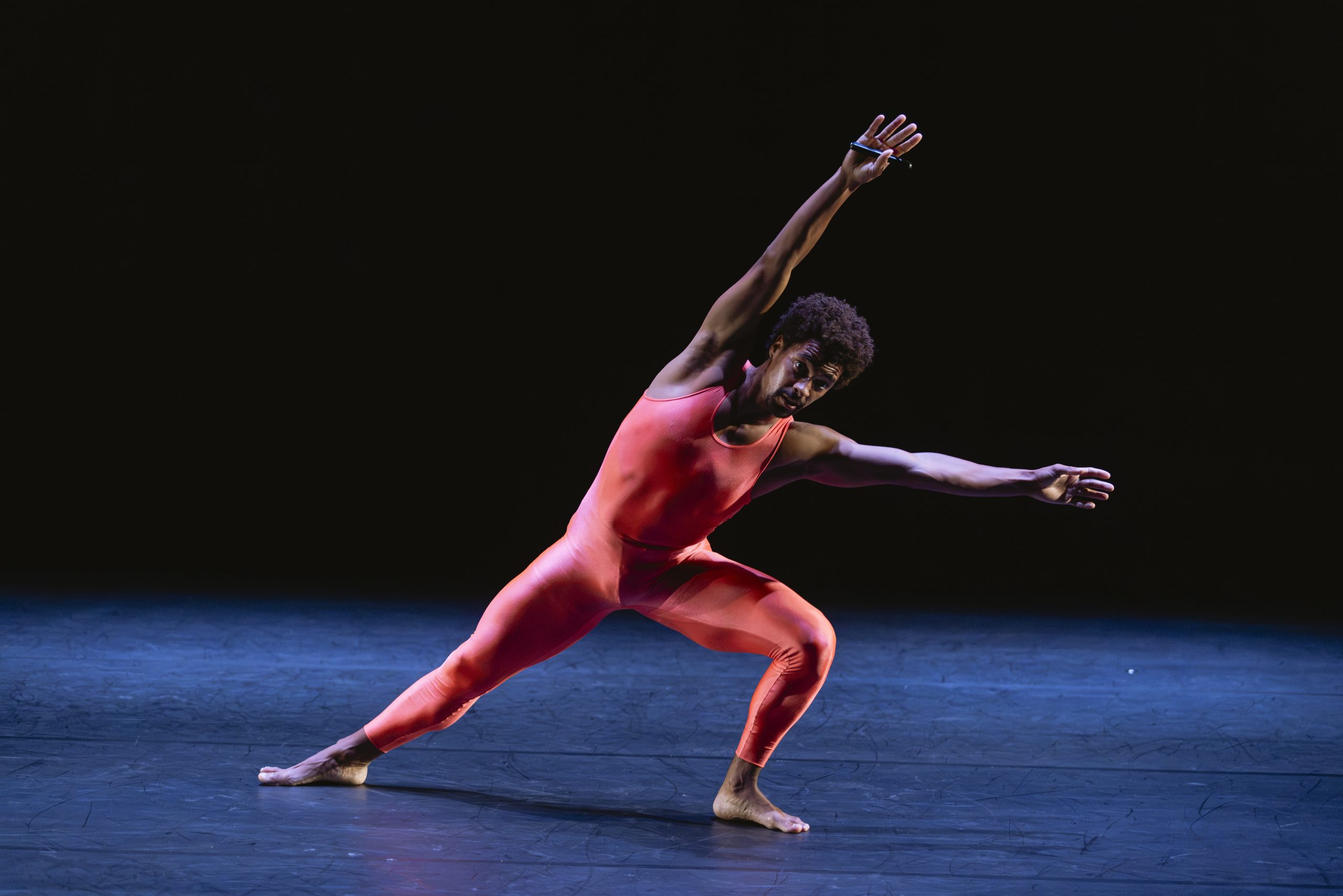
Lyre Liar – Liam Francis | FQD 2026 ©Melika Dez
VÂTCHIK DANSE: FOR ITS SOCIAL COMMENTARY
About 350 people visited the Atwater Market to watch three remarkable pieces, including L’inconstance (2024) by the Iranian duo Vâtchik Danse. Drawing on the current social reality in Iran, Nasim Lootij and Kiasa Nazeran draw inspiration from the intense and exaggerated emotions of German Expressionism. During the Q&A following their performance, Lootij explained that this artistic movement emerged in Germany between the two world wars and became a means of expressing the powerful emotions associated with those difficult times.
The pair of performers begins the piece with a mesmerizing slowness and a long sheet of paper separating them. I found myself completely captivated by their calculated and gradual movements. Suddenly, intense actions and expressions emerge from within this slowness. Lootij’s contorted facial expressions and Nazeran’s exaggerated applause as he lies down on stage create vivid images. The performance, which depicts the performers’ real-life experiences, moved me deeply. Vâtchik Danse presents an authentic experience that powerfully highlights Iranian reality and evokes strong emotions that linger with the audience long after the final bow.
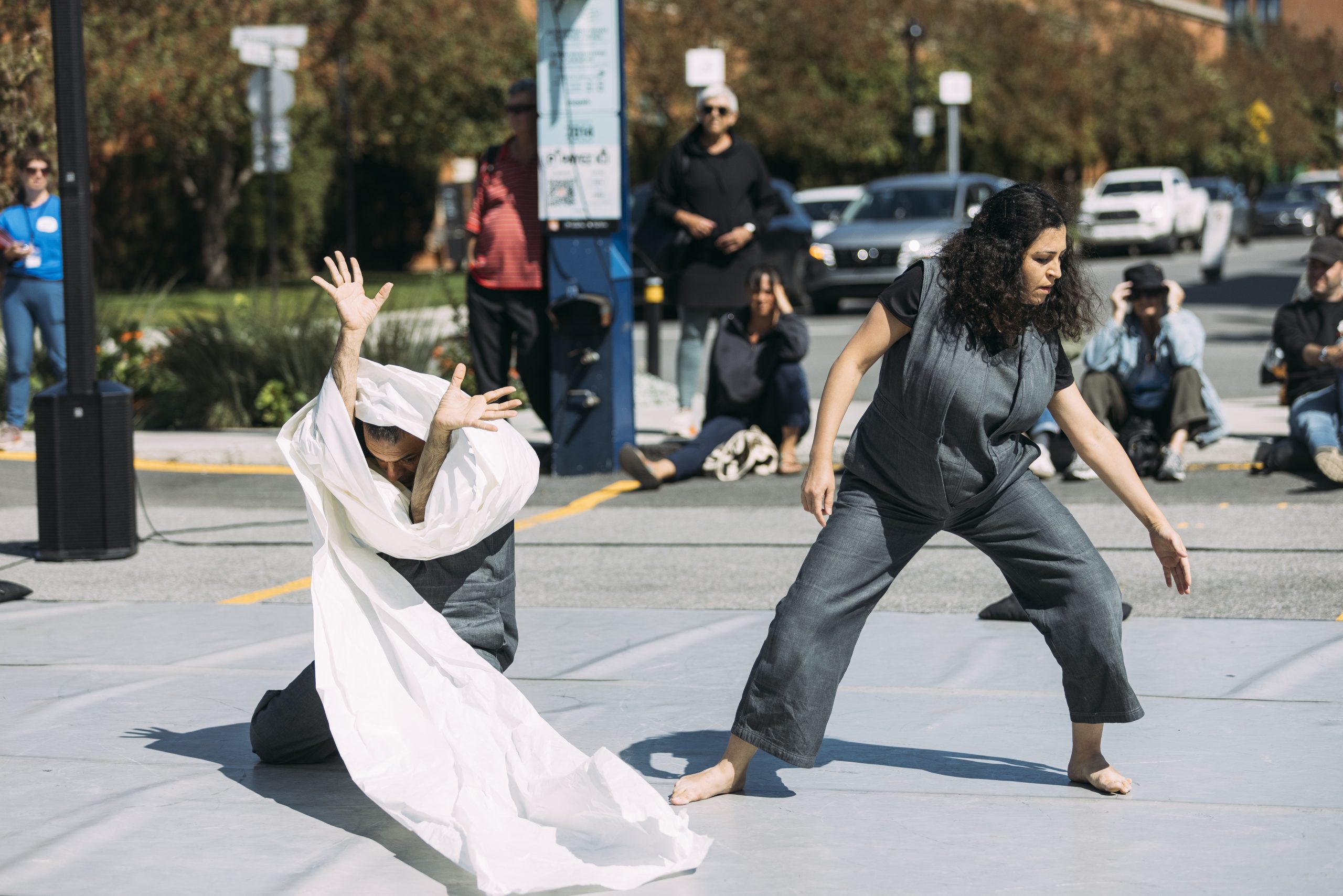
L’Inconsistance – Vâtchik Danse | FQD 2026 ©Melika Dez
MARGIE GILLIS: FOR THE EMOTIONS SHE EVOKES
An unshakable silence falls as the spotlight illuminates Margie Gillis’s face at Place-des-Arts. I was completely moved when I saw Gillis dance for the first time in Littérature du corps in 2023. So I was looking forward to seeing her magnetic presence again, along with her iconic long hair dancing around her hips. On this evening at FQD, Gillis premieres her new work, As Tenderness Leaves the World, characterized by fluidity and meticulous attention to detail. She begins to move gradually and with intention, bathed in the spotlight. Her arms float, tracing circular movements, and she creates the illusion that she is gliding across the stage.
What is unique about Gillis is her ability to captivate an audience’s attention even with small, subtle movements. During her new piece, there are moments when Gillis remains almost motionless, and I found myself holding my breath without even realizing it. Years of research and passion are evident in each of her movements. At the end of her performance, the lights gradually dim so that the audience can catch the last glimpses of her facial features. Immersed in the magic of her new creation, Gillis’s dance lingers in my body long after she leaves the stage.
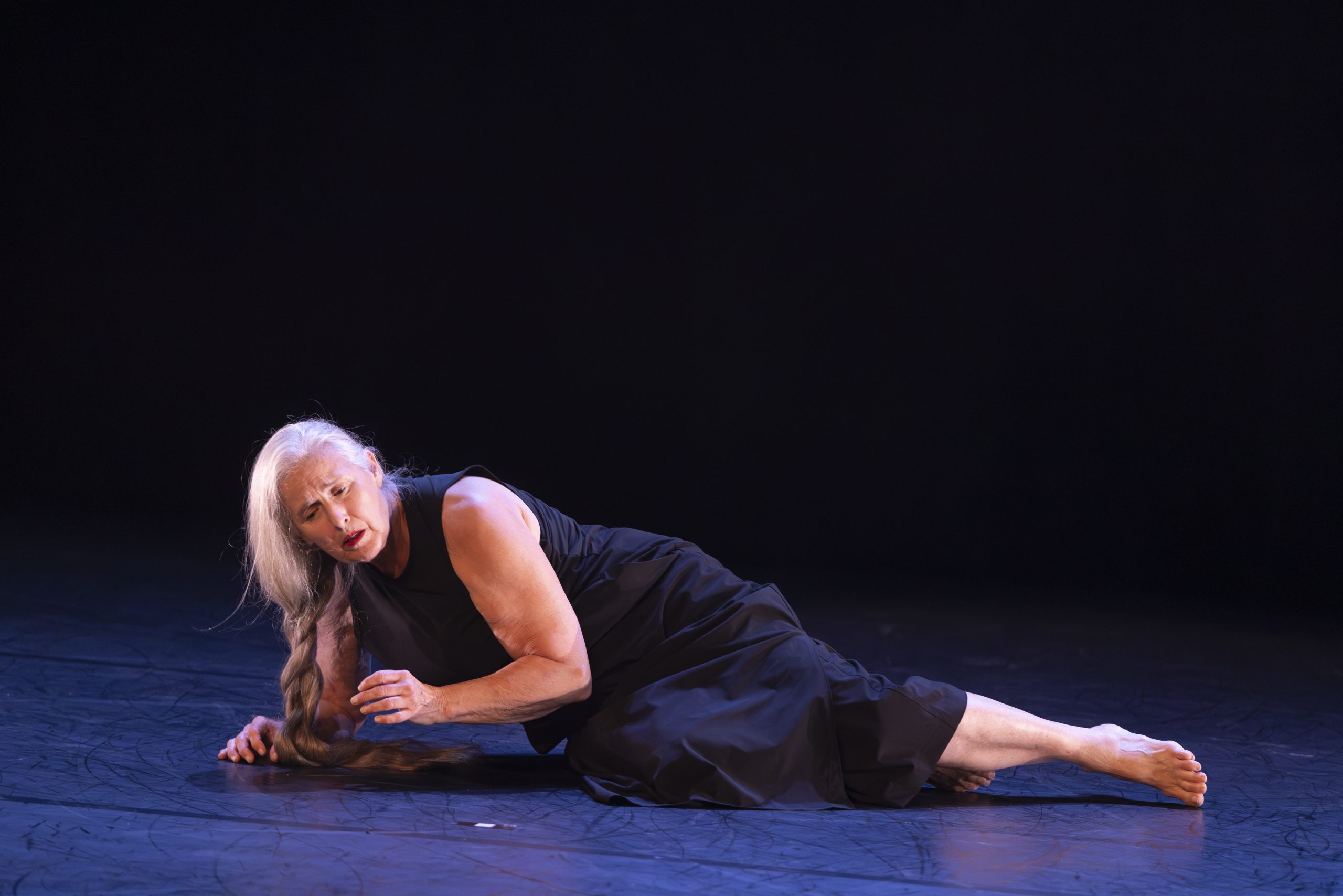
As tenderness leaves the world – Margie Gillis | FQD 2026 ©Melika Dez
Thanks to this volunteer opportunity for FQD, I’m returning to my dance school with a deep appreciation for Montrealers, dancers on the local (and international) scene, and this city that strives to push the arts forward. The experience allowed me to connect with the city in a new way, letting me encounter contemporary dance in the streets and neighborhoods I frequented regularly. I’m bringing a precious piece of Montreal back with me to my classes abroad, and I hope to continue showcasing my hometown’s passion in my own performances.
BIOGRAPHY
Mattia Teresa Falvo (she/her) is an Italian-Montrealer contemporary dancer. She is currently completing her bachelor’s degree in contemporary dance at the Institute of the Arts Barcelona in Spain. She has also worked closely with several European artists during the bluebox intensive in Vienna, including Sofia Nappi, Alleyne Dance, and Anton Lachky. In addition, she has directed two dance videos, KEEP YOUR EYES PEELED (2025) and WHERE DO I PUT MY HEART? (2026). Mattia is interested in physicality, sensory movement, and acrobatic floor work.